Shiodome汐留
Ginza, Yurakucho and Hibiya guide
From Ginza's main street of department stores and old shops to theater-filled Hibiya and the bars under the tracks at Yurakucho and Shimbashi. It is all walkable: shop by day, drink under the railway at night.
Things to see 4 classics
By interest
By how you get there
By distance
- 1
Ginza
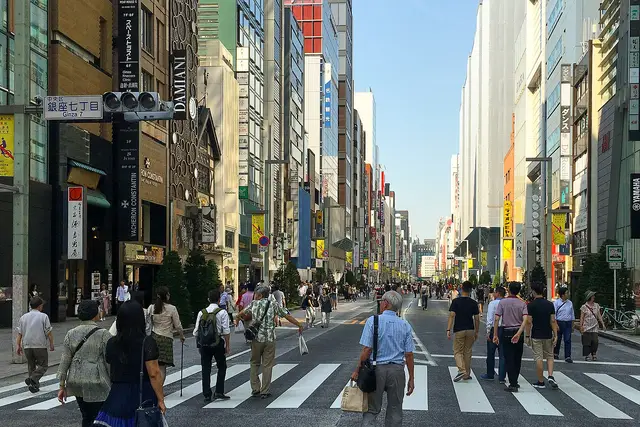
Tokyo's classic shopping district of long-established department stores, specialty shops and luxury brands. The Kabukiza theater is here.
- Shopping & strolling
- Food & markets
about 2 hrFreeFine on a rainy day
Subway · About 10 min from Ginza ・ Marunouchi subway line to Ginza ・ 1.1km from here
- 2
Tokyo International Forum
Known for its ship-shaped glass hall. The plaza hosts the Oedo Antique Market on some Sundays.
- Museums
- Shopping & strolling
about 30 minFreeFine on a rainy day
Walk · About 8 min from Ginza ・ Just north of Yurakucho Station ・ 1.6km from here
- 3
Yurakucho under-the-tracks bars
Yakitori stalls and izakaya packed under the JR viaduct. Drink from early evening as trains rumble overhead.
- Food & markets
- Night views
about 60 minFreeFine on a rainy day
Walk · About 7 min from Ginza ・ By the Hibiya exit of Yurakucho Station ・ 1.2km from here
- 4
Tokyo Midtown Hibiya and the Godzilla statue
A mall whose 6th-floor garden overlooks Hibiya Park. A Godzilla statue stands in front of Chanter next door.
- Shopping & strolling
- Views
- Anime & film
about 60 minFreeFine on a rainy day
Walk · About 7 min from Ginza ・ Connected to Hibiya Station ・ 1.2km from here
Check prices, opening hours and operating days in official sources.
Photo and data credits
Pedestrians on Chuo-dori, the main street of Ginza Daniel Ramirez (CC BY 2.0). Cropped and resized.
Facilities & features
- Easy step-free access
- Typical transfer time: about 4 min
Lines from here
Within walking distance of this station
See nearby on a map- Go hereNittele Big Clock (Shiodome)About 3 min on foot
A giant mechanical clock designed by Hayao Miyazaki. At set times its figures and gears spring into motion.
- Go hereOld Shimbashi Station Railway History Exhibition RoomAbout 6 min on foot
A rebuilt station on the site where Japan's first railway departed in 1872. Remains of the old platform are on view.
- Go hereShimbashi SL Square and New Shimbashi BuildingAbout 6 min on foot
A station square with a steam locomotive on display. The old building opposite is packed with cheap diners and bars.
- Go hereHama-rikyu GardensAbout 7 min on foot
A former shogun's garden with a pond fed by seawater. Sip matcha at the teahouse on the water, with skyscrapers rising beyond.
Tips for this place
Write a tipNo tips match these filters yet.
Questions about this place
Ask a questionNo questions yet. Ask about getting here, tickets or luggage.