Mitsukoshimae三越前
Nihombashi and Ningyocho guide
Nihombashi, once the starting point of Edo's five highways, is a town of grand old department stores and merchant houses. Walk east to Ningyocho's old streets around Amazake Yokocho and Suitengu Shrine.
Things to see 5 classics
By interest
By how you get there
- 1
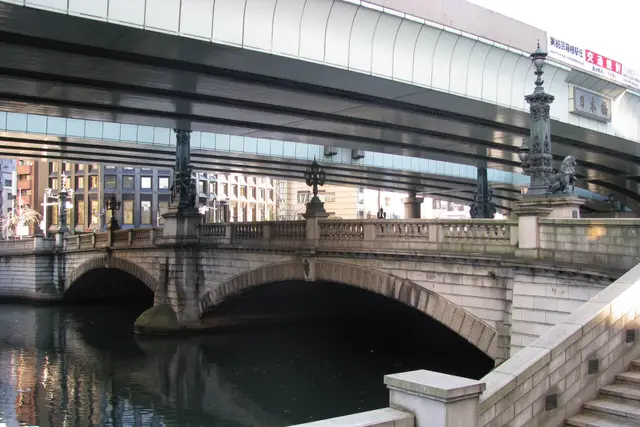
Nihonbashi Bridge
A 1911 stone bridge marking the zero point of Japan's roads. River cruises leave from the pier at its foot.
- History & buildings
- Views
about 30 minFree
Walk · About 3 min from Nihombashi ・ 400m from here
- 2
Nihombashi Mitsukoshi Main Store
A department store whose building is an Important Cultural Property. A towering celestial maiden statue fills its central hall.
- Shopping & strolling
- History & buildings
- Food & markets
about 60 minFreeFine on a rainy day
Walk · About 4 min from Nihombashi ・ Connected to Mitsukoshimae Station ・ 200m from here
- 3
Nihombashi Takashimaya
A department store in an early-Showa building, where vintage elevators run by uniformed attendants are still in use.
- Shopping & strolling
- History & buildings
about 45 minFreeFine on a rainy day
Walk · About 3 min from Nihombashi ・ Connected to Nihombashi Station ・ 700m from here
- 4
Suitengu Shrine
A shrine for safe childbirth. On the Day of the Dog, a favored day for prayers, it fills with families.
- Temples, shrines & churches
about 30 minFree
Walk · About 15 min from Nihombashi ・ Right by Suitengumae Station (Hanzomon Line) ・ 1.1km from here
- 5
Amazake Yokocho, Ningyocho
An old-town street in Ningyocho lined with long-running shops for taiyaki, ningyo-yaki cakes and tofu. Good for snacking.
- Food & markets
- History & buildings
- Shopping & strolling
about 60 minFree
Subway · About 6 min from Nihombashi ・ Toei Asakusa Line to Ningyocho, then a short walk ・ 1000m from here
Check prices, opening hours and operating days in official sources.
Photo and data credits
The stone arches of Nihonbashi bridge beneath the expressway Aimaimyi (CC BY-SA 3.0). Cropped and resized.
Facilities & features
- Elevators available (the route may be longer)
- Typical transfer time: about 6 min
Lines from here
Within walking distance of this station
See nearby on a map- Go hereNihombashi Mitsukoshi Main StoreAbout 3 min on foot
A department store whose building is an Important Cultural Property. A towering celestial maiden statue fills its central hall.
- Go hereNihonbashi BridgeAbout 6 min on foot
A 1911 stone bridge marking the zero point of Japan's roads. River cruises leave from the pier at its foot.
- Go hereMitsui Memorial MuseumAbout 1 min on foot
Tea utensils and artworks handed down in the Mitsui family, shown inside the Mitsui Main Building, an Important Cultural Property.
- Go hereFukutoku Shrine and COREDO MuromachiAbout 1 min on foot
A small shrine surrounded by towers, and malls full of Japanese crafts and restaurants. The lanes stay lit in the evening.
Tips for this place
Write a tipNo tips match these filters yet.
Questions about this place
Ask a questionNo questions yet. Ask about getting here, tickets or luggage.