Skip to content

Menu

Find a placePlan a routeTravelers' routes

Mito, Oarai and Hitachinaka guide

The old castle town of the Mito domain, home to Kairakuen, famed for plum blossoms, and the Kodokan school. Trains and buses reach the flower hills of Hitachi Seaside Park and the seaside shrines of Oarai.

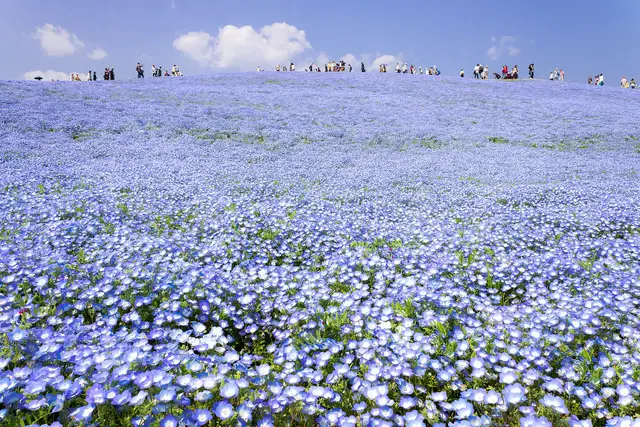
Blue nemophila flowers covering the hill at Hitachi Seaside Park

Things to see 9 classics

Classics 9 places
By interest
By how you get there
By distance
  • 1

    Kairakuen Garden

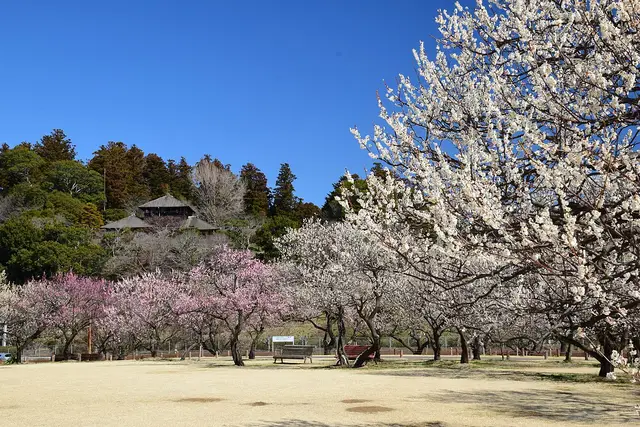
    One of Japan's three great gardens, with about 3,000 plum trees of 100 varieties and the Kobuntei villa. Known for its plum festival.

    • Nature
    • History & buildings

    Paid entry

    Bus · About 25 min from Mito ・ About 20 minutes by bus from Mito Station North Exit ・ 2.4km

    Go here
  • 2

    Kodokan (former Mito domain school)

    The Mito domain school, where the last shogun Yoshinobu studied. A Special Historic Site with original halls and 800 plum trees.

    • History & buildings

    Paid entryFine on a rainy day

    Walk · About 8 min from Mito ・ About 8 minutes on foot from Mito Station North Exit ・ 500m

    Go here
  • 3

    Lake Senba

    A lake 3 km around, just south of Kairakuen. Walk the shore or rent a boat; the lakeside cherry trees are lovely in spring.

    • Nature
    • Activities

    Free

    Walk · About 15 min from Mito ・ About 15 minutes on foot from Mito Station South Exit (to the east shore) ・ 2.0km

    Go here
  • 4

    Art Tower Mito

    An arts complex by Arata Isozaki, marked by its striking tower, with a contemporary art gallery, a concert hall and a theater.

    • Museums

    Partly paidFine on a rainy dayWheelchair & stroller friendly

    Bus · About 15 min from Mito ・ Bus from Mito Station North Exit to Izumicho 1-chome, then about 2 minutes on foot ・ 1.4km

    Go here
  • 5

    Hitachi Seaside Park

    A huge park whose Miharashi Hill turns blue with nemophila in spring and red with kochia in autumn. It also has an amusement park.

    • Nature
    • With kids

    Paid entry

    Train · About 40 min from Mito ・ JR Joban Line to Katsuta (about 6 minutes), then about 15 minutes by bus to the West Gate ・ 11km

    Go here
  • 6

    Oarai Isosaki Shrine and the Kamiiso torii

    A torii gate stands on the sea rock where the shrine's gods are said to have landed. Photographers gather here at sunrise.

    • Temples, shrines & churches
    • Views

    Bus · About 40 min from Mito ・ About 30 minutes on Ibaraki Kotsu bus route 50 from Mito Station to Oarai Isosaki Jinja-shita ・ 12km

    Go here
Show on map

ClassicsFor visitorsLocal picks

Suggested routes

Estimates, leaving at 9:00

  • Mito's castle town and Kairakuen

    Leave 9:00 → until about 13:56 (about 5 hr)

    1. 9:00Mito
    2. about 8 min on foot

      9:08Kodokan (former Mito domain school)stay about 45 min
    3. about 3 min on foot

      9:56Mito Castle ruins (Otemon Gate and Ninomaru)stay about 45 min
    4. about 24 min on foot

      11:05Art Tower Mitostay about 45 min
    5. about 24 min on foot

      12:14Kairakuen Gardenstay about 45 min
    6. about 12 min on foot

      13:11Lake Senbastay about 45 min

    The Kodokan and castle ruins north of the station are walkable. Take a bus from the art center to Kairakuen, then walk back to the station along Lake Senba.

    Plan this route
  • The Hitachinaka and Oarai coast

    Leave 9:00 → until about 14:37 (about 5.5 hr)

    1. 9:00Mito
    2. about 40 min by transport

      9:40Hitachi Seaside Parkstay about 45 min
    3. about 20 min by transport

      10:45Sakatsura Isosaki Shrinestay about 45 min
    4. about 25 min by transport

      11:55Nakaminato Fish Marketstay about 45 min
    5. about 12 min on foot

      12:52Aquaworld Ibaraki Prefectural Oarai Aquariumstay about 45 min
    6. about 15 min by transport

      13:52Oarai Isosaki Shrine and the Kamiiso toriistay about 45 min

    Start at the flower park and head south along the coast by the Minato Line and buses, then ride the bus back to Mito from Oarai Isosaki Shrine.

    Plan this route

Main ways to get around

  • JR Joban Line Limited Express Hitachi / Tokiwa

    About 65–85 minutes from Shinagawa, Tokyo or Ueno to Mito. Local trains also run but take around 2 hours.

  • Local buses from Mito Station North Exit

    To Kairakuen, about 20 minutes from stops 4 or 6. To Art Tower Mito, any bus from stops 4–7 to Izumicho 1-chome, about 10 minutes.

  • Hitachinaka Seaside Railway Minato Line

    Change at Katsuta, about 6 minutes from Mito on the Joban Line. It runs to Nakaminato (fish market), Isozaki (Sakatsura Isosaki Shrine) and Ajigaura.

  • Kashima Rinkai Railway Oarai-Kashima Line

    From Mito to Oarai Station. From there the Umimachi Line loop bus runs to the aquarium and Oarai Isosaki Shrine.

  • Mito-go highway bus and Ibaraki Airport bus

    The Mito-go runs from Tokyo Station Yaesu South Exit to Mito Station in about 2 hours. Buses from Ibaraki Airport take about 40 minutes via the expressway.

Getting to Mito

Check prices, opening hours and operating days in official sources.

Local food specialties

Foods introduced as local specialties of Mito, Oarai and Hitachinaka. They are listed by dish, not by shop, and are not recommendations.

  • Noodles

    Stamina ramen (noodles with spicy liver and vegetable sauce)

    スタミナラーメン

    Ramen with a sweet-spicy sauce of liver, pumpkin and chives. Served hot or as chilled noodles with hot sauce.

    Known in
    Hitachinaka
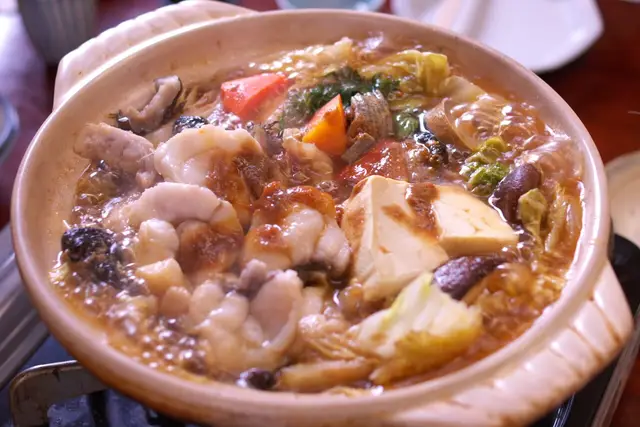
  • A clay pot of monkfish simmered with tofu and vegetables

    Hot pots & soups

    Ankou-nabe (monkfish hot pot)

    あんこう鍋

    Hot pot made with monkfish, a winter specialty of Ibaraki. Monkfish dishes are served around November to March.

    Known in
    All over Ibaraki
  • Seafood

    Shirasu-don (whitebait rice bowl)

    しらす丼

    Rice bowl topped with raw or boiled whitebait. Ibaraki is among the top whitebait-catching prefectures in Japan.

    Known in
    All over Ibaraki
  • Seafood

    Ibaraki seafood rice bowl (kaisen-don)

    茨城の海鮮丼

    Rice bowl topped with seasonal fish. Coastal towns each have a fish market where it can be eaten.

    Known in
    All over Ibaraki
  • Noodles

    Hitachi-aki soba (buckwheat noodles)

    常陸秋そば

    Soba made from Ibaraki's Hitachi-aki buckwheat. It is also eaten dipped in tsuke-kenchin, a local vegetable soup.

    Known in
    All over Ibaraki
  • Seafood

    Mehikari (greeneye fish, usually fried)

    めひかり

    Small deep-sea fish caught off Ibaraki most of the year, usually fried or tempura. Fattiest from about October to February.

    Known in
    All over Ibaraki
  • Meat

    Hitachi-gyu (Ibaraki wagyu beef)

    常陸牛

    Ibaraki-raised black wagyu that meets a set grade. Known for lean, good-quality meat.

    Known in
    All over Ibaraki

The restaurants shown are not recommendations from this site.

Traditional home dishes of Ibaraki (30)

When to go

Plum blossoms peak in February–March and nemophila from mid-April to early May. Winter is dry (about 50 mm a month); September–October is the wettest time.

Temperature (line: average; band: low to high)

Precipitation (mm)

JanFebMarAprMayJunJulAugSepOctNovDec

Typical seasons

Plum blossoms (Kairakuen)

Nemophila (Hitachi Seaside Park)

Mito Komon Festival

Red kochia (Hitachi Seaside Park)

Show as a table
JanFebMarAprMayJunJulAugSepOctNovDec
High (℃)9.29.81317.82224.528.53026.421.216.311.4
Avg (℃)3.34.17.412.31720.324.225.622.116.610.85.6
Low (℃)-1.8-1.22.1712.5172122.218.612.55.90.5
Rain (mm)54.553.8102.8116.7144.5135.7141.8116.9186.3185.479.749.6

JMA climate normals (1991–2020, Mito). JMA data

Experiences, tours & cruises1

  • Tour

    Volunteer guided walks of Kairakuen and Kodokan, Mito

    偕楽園・弘道館のボランティアガイド

    Mito Historical Advisers (Mito Tourism & Convention Association)

    Local volunteers guide you around Kairakuen garden and the Kodokan school for free, with same-day sign-up on weekends. English and Chinese guides are arranged separately.

    • English available

    No reservation needed

    Getting thereKodokan is about 8 minutes on foot from the north exit of Mito Station

    Source: 水戸観光コンベンション協会

See all experiences, tours & cruises

DetailsGo here

Sources

Local food specialties

Each specialty was checked against an official page (prefecture, municipality, tourism association or JNTO) on 2026-11-17. The descriptions were written by this site.

Photo and data credits

Blue nemophila flowers covering the hill at Hitachi Seaside Park Kakidai (CC BY-SA 4.0) / White and pink plum blossoms below the Kobuntei pavilion at Kairakuen SQ0 (CC BY 4.0) / A clay pot of monkfish simmered with tofu and vegetables Yamaguchi Yoshiaki Camera location36° 19′ 21″ N, 140° 34′ 07.5″ E View this and (CC BY-SA 2.0). Cropped and resized.