Skip to content

Menu

Find a placePlan a routeTravelers' routes

Nachikatsuura and Kumano guide

A hot-spring town on the southern Kii Peninsula, gateway to the three Kumano shrines. Nachi Falls is about 30 minutes away by bus; Shingu's Hayatama Taisha and the mountain shrine of Hongu are further on.

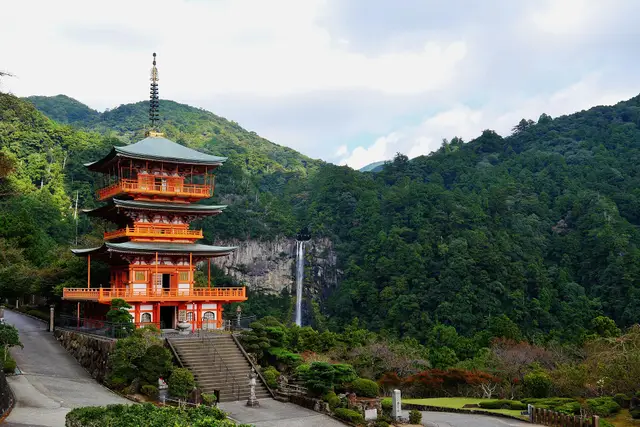
Seigantoji's three-storied pagoda and Nachi Falls

Things to see 9 classics

Classics 9 places
By interest
By how you get there
By distance
  • 1

    Nachi Falls

    The waterfall worshipped as a god, said to be the origin of Kumano Nachi Taisha. A single great fall drops through the forest.

    • Nature
    • Temples, shrines & churches
    • Views

    about 45 min

    Bus · About 35 min from Kii-Katsuura ・ About 30 minutes by Kumano Gobo Nankai Bus toward Nachisan ・ 7.3km

    Go hereDetails
  • 2

    Kumano Nachi Taisha

    One of the three Kumano shrines, head of all Kumano shrines in Japan. Pass through the hollow of its 850-year-old camphor tree.

    • Temples, shrines & churches
    • History & buildings

    about 60 minMany stairs or slopes

    Bus · About 50 min from Kii-Katsuura ・ Bus to Nachisan, then about 15 minutes up the stone steps ・ 6.6km

    Go hereDetails
  • 3

    Seiganto-ji Temple

    Temple No. 1 of the Saigoku pilgrimage. See the main hall rebuilt by Hideyoshi and the red pagoda framed by Nachi Falls.

    • Temples, shrines & churches
    • Views
    • History & buildings

    about 45 minPartly paid

    Bus · About 50 min from Kii-Katsuura ・ Bus to Nachisan, then up the stone steps ・ 6.6km

    Go here
  • 4

    Daimonzaka Slope

    A section of the Kumano Kodo where mossy stone steps climb between giant cedars, leading up to Nachi Taisha.

    • History & buildings
    • Nature
    • Activities

    about 60 minFreeMany stairs or slopes

    Bus · About 25 min from Kii-Katsuura ・ Nachisan-bound bus to the foot of Daimonzaka ・ 5.6km

    Go here
  • 5

    Kumano Hayatama Taisha

    One of the three Kumano shrines, in Shingu town, with vermilion halls and a treasure house. Ramps allow wheelchair access.

    • Temples, shrines & churches
    • History & buildings

    about 45 minWheelchair & stroller friendly

    Train · About 45 min from Kii-Katsuura ・ JR Kisei Line to Shingu, then walk ・ 12km

    Go here
  • 6

    Kumano Hongu Taisha

    The central Kumano shrine. Its halls, moved here after a Meiji-era flood, stand atop 158 stone steps among cedars.

    • Temples, shrines & churches
    • History & buildings
    • Nature

    about 60 min

    Bus · About 120 min from Kii-Katsuura ・ JR to Shingu, then local bus to Hongu Taisha-mae ・ 28km

    Go here
Show on map

ClassicsFor visitorsLocal picks

Suggested routes

Estimates, leaving at 9:00

  • Fudarakusan-ji, the Daimonzaka slope and Nachi Falls

    Leave 9:00 → until about 14:09 (about 5 hr)

    1. 9:00Kii-Katsuura
    2. about 15 min by transport

      9:15Fudarakusan-ji Templestay about 30 min
    3. about 20 min by transport

      10:05Daimonzaka Slopestay about 60 min
    4. about 18 min on foot

      11:23Kumano Nachi Taishastay about 60 min
    5. about 2 min on foot

      12:25Seiganto-ji Templestay about 45 min
    6. about 14 min on foot

      13:24Nachi Fallsstay about 45 min

    Daimonzaka and the shrine approach are long flights of stone steps. Wear good shoes and carry water.

    Plan this route
  • Hayatama Taisha in Shingu, then Hongu Taisha

    Leave 9:00 → until about 13:55 (about 5 hr)

    1. 9:00Kii-Katsuura
    2. about 45 min by transport

      9:45Kamikura Shrine (Gotobiki Rock)stay about 45 min
    3. about 14 min on foot

      10:44Kumano Hayatama Taishastay about 45 min
    4. about 45 min by transport

      12:14Kumano Hongu Taishastay about 60 min
    5. about 11 min on foot

      13:25Oyunoharastay about 30 min

    Buses to Hongu are few, so fix your return time before you set out.

    Plan this route

Main ways to get around

  • Limited Express Kuroshio

    From Shin-Osaka and Tennoji along the Kii Peninsula coast to Kii-Katsuura, about 4 hours.

  • Limited Express Nanki

    From Nagoya on the Kisei Line to Shingu and Kii-Katsuura, about 3.5–4 hours.

  • Kumano Gobo Nankai Bus (to Nachisan)

    About 30 minutes from Kii-Katsuura Station (shown as Katsuura-eki) to Nachisan, passing Fudarakusan-ji near Nachi Station.

  • Buses to Hongu

    Local buses take a little over an hour from Shingu Station to Kumano Hongu Taisha-mae, and also serve Yunomine Onsen. They are infrequent; check times.

  • JR Kisei Line

    About 20 minutes from Kii-Katsuura to Shingu and 30–40 minutes to Kushimoto, by limited express or local train.

Getting to Kii-Katsuura

Check prices, opening hours and operating days in official sources.

Local food specialties

Specialties of Nachikatsuura and Kumano, together with those of other places in Wakayama. They are listed by dish, not by shop, and are not recommendations.

  • Rice dishes

    Mehari-zushi (rice ball wrapped in pickled mustard greens)

    めはり寿司

    A large rice ball wrapped in pickled takana greens, once packed as lunch for mountain work in Kumano.

    Known in
    Kumano
  • Seafood

    Nachikatsuura fresh (unfrozen) tuna

    那智勝浦の生まぐろ

    Nachikatsuura lands Japan's largest catch of fresh longline tuna; winter is the peak season.

    Known in
    Nachikatsuura
  • Meat

    Kumano beef (local branded wagyu)

    熊野牛

    Branded wagyu of Wakayama, bred from cattle long raised in the Kumano region.

    Known in
    Kumano
  • Noodles

    Wakayama ramen (chuka soba, soy-pork bone broth)

    和歌山ラーメン

    Soy-flavored ramen in a chicken or pork bone broth; locally also called chuka soba.

    Known in
    Wakayama City · Wakayama, Kada and Kishi guide
  • Rice dishes

    Haya-zushi (pressed mackerel sushi eaten with ramen)

    早寿司

    Pressed mackerel sushi served alongside Wakayama ramen; many shops use the honor system for payment.

    Known in
    Wakayama City · Wakayama, Kada and Kishi guide
  • Meat

    Taiji whale dishes (sashimi, tatsuta-age, hari-hari nabe)

    太地の鯨料理

    Whale meat as sashimi, fried tatsuta-age or hari-hari hot pot; Taiji is said to be the birthplace of traditional whaling.

    Known in
    Taiji
  • Hot pots & soups

    Kue nabe (giant grouper hot pot)

    クエ鍋

    A hot pot of kue (giant grouper), a prized winter fish with a small catch.

    Known in
    Southern Wakayama
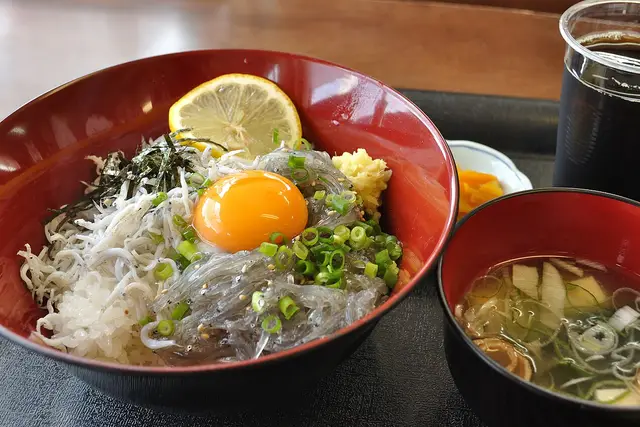
  • Shirasu-don: raw and boiled whitebait on rice with an egg yolk and lemon

    Seafood

    Shirasu-don (whitebait rice bowl)

    しらす丼

    Rice bowl topped with boiled or raw whitebait, served near the landing ports.

    Known in
    Wakayama coast
  • Japanese cuisine

    Koyasan shojin ryori (Buddhist vegetarian cuisine)

    高野山の精進料理

    Meat- and fish-free Buddhist cuisine of Koyasan, served at temples and restaurants.

    Known in
    Koyasan · Koyasan (Mount Koya) guide
  • Seafood

    Arida hairtail (tachiuo, called tacchyo locally)

    有田の太刀魚

    Hairtail caught in the Kii Channel; called 'tacchyo' in Arida.

    Known in
    Arida · Yuasa and Arida guide

The restaurants shown are not recommendations from this site.

Traditional home dishes of Wakayama (27)

When to go

Very rainy: June and September each exceed 440 mm. Winters are mild (about 8°C on average) and often sunny.

Temperature (line: average; band: low to high)

Precipitation (mm)

JanFebMarAprMayJunJulAugSepOctNovDec

Typical seasons

Cherry blossoms

Oto Matsuri (Kamikura Shrine)

Nachi Fire Festival

Show as a table
JanFebMarAprMayJunJulAugSepOctNovDec
High (℃)11.912.815.719.923.325.83030.92823.719.114.3
Avg (℃)7.68.311.315.719.422.426.327.224.620159.9
Low (℃)3.64.2711.515.719.423.324.321.816.911.46
Rain (mm)110.1151.8259.8299.1311.7444.6342.2276.4443401184109.6

JMA climate normals (1991–2020, Shingu). JMA data

Experiences, tours & cruises6

  • Kimono & yukata

    Walk Daimonzaka on the Kumano Kodo in Heian-period costume

    平安衣装で熊野古道の大門坂を歩く

    Daimonzaka Chaya (Nachi-Katsuura Tourism Bureau)

    At the Daimonzaka teahouse below Mt. Nachi, dress in recreated Heian-period costume and stroll the Daimonzaka section of the Kumano Kodo.

    Nearest stationKii-Katsuura

    Source: 和歌山県観光連盟

  • Tour

    Kumano Kodo walk with a Kumano Hongu storyteller guide

    熊野本宮語り部の会と歩く熊野古道

    Kumano Hongu Kataribe (storyteller guides)

    Area guide: Kii-Tanabe and the Kumano Kodo gateway

    A Kumano Hongu storyteller guides you along the Kumano Kodo, introducing the oji shrines, stone Jizo, local legends and wildflowers on the way.

    Reservation required

    Getting thereAbout 2 hours by bus from Kii-Tanabe Station (to Kumano Hongu)

    Source: 和歌山県観光連盟

  • Tour

    Kumano Kodo guided walk by the Kumano-Nachi Guide Association

    熊野・那智ガイドの会の熊野古道ガイド

    Kumano-Nachi Guide Association

    Local guides from Nachi-Katsuura walk the Kumano Kodo with you, mixing its history with stories of the area.

    Getting thereAbout 20 minutes by bus from JR Kii-Katsuura Station

    Source: 和歌山県観光連盟

  • Tour

    Guided walk of Shingu's three World Heritage shrines

    新宮の世界遺産3社巡りガイドウォーク

    Shingu City Tourism Association

    Walk with a guide to Shingu's three World Heritage shrines: Kumano Hayatama Taisha, Kamikura Shrine and Asuka Shrine.

    Nearest stationShingu

    Source: 和歌山県観光連盟

  • Cruise & sightseeing boat

    Kumano River traditional boat ride (World Heritage)

    世界遺産 熊野川舟下り

    Kumano River Boat Center

    Ride a wooden boat down the Kumano River, a World Heritage pilgrimage route, to near Kumano Hayatama Taisha, with a storyteller describing the views and history.

    • About 90 min

    Reservation required

    Getting thereAbout 30 minutes by Kumano Kotsu bus from JR Shingu Station to Michi-no-eki Kumanogawa, then 1 minute on foot

    Source: 和歌山県観光連盟

  • Cruise & sightseeing boat

    Kino-Matsushima island cruise from Katsuura Port

    紀の松島めぐり(勝浦港の遊覧船)

    Kinomatsushima Kanko

    A boat tour of the islands and coastline scattered over about 17 km around Katsuura Port, including islands named for their shapes, like Camel Island and Lion Island.

    Getting thereAbout 10 minutes' walk from JR Kii-Katsuura Station

    Source: 和歌山県観光連盟

See all experiences, tours & cruises

DetailsGo here

Sources

Local food specialties

Each specialty was checked against an official page (prefecture, municipality, tourism association or JNTO) on 2026-11-17. The descriptions were written by this site.

Photo and data credits

Seigantoji's three-storied pagoda and Nachi Falls Zairon (CC BY 4.0) / Shirasu-don: raw and boiled whitebait on rice with an egg yolk and lemon Ocdp (CC0). Cropped and resized.